

The term “Cycle of Abuse” was created in 1979 by psychologist Lenore E. Walker to describe the repeated patterns that happen in abusive relationships.
These relationships often move through periods of tension, abuse, apology, and calm before the cycle starts again. Children who grow up seeing abuse may begin to think these behaviors are normal in relationships. Although every situation is different, the cycle of abuse helps explain why domestic violence can be ongoing and difficult to escape. The cycle often continues until the survivor is able to safely leave the relationship or the abuse is stopped.
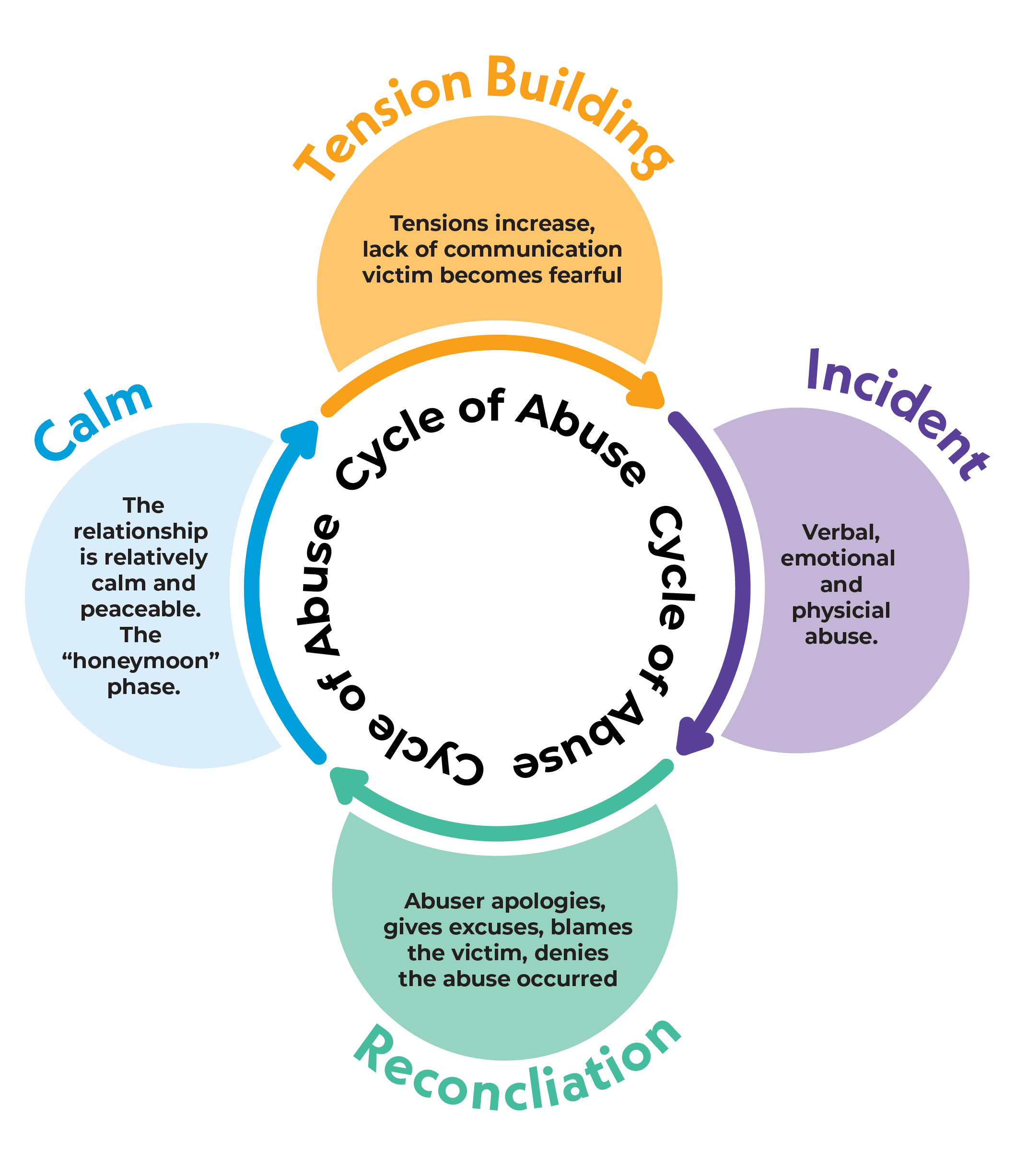
Tension Building
During this stage, stress and conflict begin to grow. Arguments may happen over children, money, relationships, work, or other daily pressures. Problems such as illness, unemployment, legal trouble, or traumatic events can also increase tension. The abuser may become angry, critical, jealous, or controlling. Survivors often feel like they are “walking on eggshells,” trying to avoid an outburst.
Incident
In this stage, the abuse happens. This may include verbal abuse, emotional abuse, threats, physical violence, or other harmful behavior. The abuser uses these actions to gain power and control. Children who witness the abuse are also deeply affected. Afterward, the abuser may blame the survivor or claim the abuse was deserved.
Reconciliation
After the abuse, the abuser may apologize, promise to change, or show affection and kindness. They may say they are sorry, buy gifts, or act loving and caring. Some may threaten self-harm or suicide to stop the survivor from leaving. Survivors may feel confused, hurt, hopeful, or responsible for what happened. Because the abuser can seem sincere, many survivors stay in the relationship believing things will get better.